
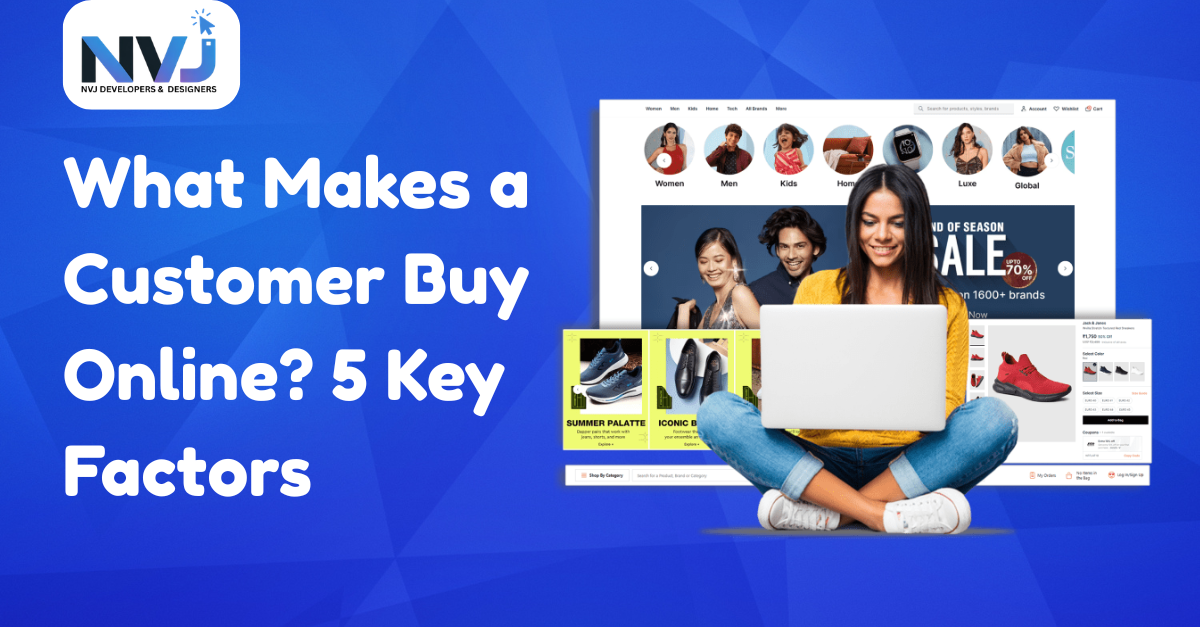
What Makes a Customer Buy Online? 5 Key Factors
Have you ever wondered why you click the “Buy Now” button on one website but close the tab on another? Shopping online has become a daily habit for millions of people. However, the journey from viewing a product to actually spending money is complex. Business owners often struggle to understand the psychology behind these online choices. It is not just about having the lowest price anymore. Modern shoppers seek safety, ease, and a sense of connection. In this article, we will explore the key elements that turn a casual browser into a loyal buyer. By understanding these triggers, you can change your digital storefront into an effective sales tool that keeps customers coming back for more.
1. The Power of Trust and Social Proof
Trust is the foundation of every single sale that takes place on the internet. A customer can’t pick up the product or look the owner in the eye like a physical shop. They’re only as good as the digital signals you feed them. If a website is suspicious or doesn’t have contact information, people will leave immediately. Establishing trust is based on transparency and on the stories of other folks. This is also known as social proof. When a buyer sees that others have had a good experience, their fear of being scammed or disappointed goes away.
Trust takes a long time to build but a second to destroy. You have to prove your business is real and reliable. That means they have a clear ‘About Us’ page and contact information that is visible. At NVJ Developers, we always tell our clients that the first step in gaining trust is a professional look. If your website looks like it was made 10 years ago, people won’t trust you with their credit card information.
To boost your credibility effectively, consider these six elements:
- Display honest customer reviews with real names and photos if possible.
- Show clear trust badges from security providers and payment gateways.
- Highlight any awards or certifications your business has recently won.
- Share case studies or success stories that show your product in action.
- Include a physical address and a working phone number for support.
- Use professional photography instead of low quality or blurry stock images.
2. User Experience and Website Navigation
The second factor that answers what drives a customer to buy online is the ease of use of the website. Imagine walking into a grocery store where the milk is in the ceiling and the checkout is behind a curtain. You would go away without buying anything. Your website is no different. If a customer has to click more than three times to find what they are looking for, they will likely go to a competitor.
User experience (UX) is all about making the shopping journey as smooth as possible. Your categories should make sense, and your search bar should actually work. A cluttered website messes with your brain. When the brain is confused, it says “no” to the purchase. In web design, simple is the ultimate sophisticated. You want the path from homepage to checkout to be a straight shot with no hurdles.
A great user experience includes the following six features:
- A fast loading speed so users do not wait more than two seconds.
- A mobile responsive design that looks perfect on every smartphone screen.
- Clear and visible “Add to Cart” buttons that stand out on the page.
- A simple search bar that suggests products as the user types.
- Easy to find shipping and return policy links on every page.
- A guest checkout option so people do not have to create accounts.
3. High Quality Product Information and Visuals
When people buy online they are buying a promise. They can’t hold the item so your descriptions and images have to do the heavy lifting. Detailed information prevents a high return rate by reducing the “buyer’s remorse”. If a customer is not sure about the size, material or color of a product, they will hesitate. Hesitation is the enemy of a successful sale.
You should aim to answer every possible question a customer might have within the product description. Don’t just list features, tell me how it benefits me. Don’t tell me “100% cotton.” Tell me “soft 100% cotton that stays cool on hot summer nights.” And visuals are just as important. Video is a big part of online sales because it shows how the product moves and looks in real life. NVJ Developers recommends high resolution zoom features for customers to see every detail of your craft.
To make your products irresistible, ensure you provide these six things:
- Multiple photos from different angles including the front, back, and sides.
- Short video clips showing the product being used in a real setting.
- A detailed size guide with measurements in both inches and centimeters.
- A clear list of materials or ingredients used in the product.
- Information about what is included in the box to avoid confusion.
- Comparison charts if you sell different versions of the same item.
4. Competitive Pricing and Clear Value
Most people check cost first – still, that’s not everything. Value matters just as much. A shopper might pick pricier gear if returns are easy or delivery doesn’t add fees. The real pull online? How everything fits together – the whole deal, not just digits. Show them how the amount asked lines up with what they gain. Let the extras speak plainly: faster help, better materials, fewer hassles.
Flash sales tap into how people feel, nudging someone on the fence to finally click. A ticking clock like “one day only” adds pressure without saying it outright. Still, too many deals might make your name sound desperate. When everything is ninety percent off forever, customers start doubting what anything was ever worth. Stand firm with solid work so prices stay honest and trust builds slowly over time.
Consider these six strategies to improve your perceived value:
- Offer free shipping or a flat rate that does not surprise buyers.
- Bundle related products together to offer a small package discount.
- Provide a “Buy Now, Pay Later” option for more expensive items.
- Create a loyalty program where customers earn points for every purchase.
- Include a small free gift or a personalized thank you note.
- Highlight a price match guarantee to show you are competitive.
5. A Secure and Effortless Checkout Process
Most purchases vanish at the final step – right on the checkout screen. That moment when someone walks away? It happens often. Lengthy steps tend to push people out. So does demanding unnecessary details. A shaky feeling about safety seals the exit. Protection comes first, always. Trust grows when users see their info shielded using modern encryption methods.
Speed matters when people pay. Each added question on the form means fewer will complete it. Skip asking for details like middle names or birth dates if they are unnecessary. Different ways to pay help too – having more than one option keeps things moving. One person might grab a card straight from their pocket, yet another reaches for PayPal without thinking twice. Offering options quietly clears the last hurdle standing between item and buyer.
To ensure your checkout process is perfect, follow these six rules:
- Keep the number of form fields to an absolute minimum level.
- Show a progress bar so users know how many steps are left.
- Accept all major credit cards and popular digital wallet services.
- Reassure customers with “Secure Checkout” labels and SSL icons.
- Allow users to save their details for faster shopping next time.
- Provide an instant chat box for help if a payment fails.
Frequently Asked Questions
Q: How can I make my website look more trustworthy to new visitors?
You can improve trust by adding real customer reviews and clear contact information. Having a professional design and using secure payment icons also helps. People feel safer when they see that a business is active and has helped other people before them.
Q: Does website speed really affect whether someone buys a product?
Yes, website speed is very important for making sales. Most users will leave a site if it takes longer than three seconds to load. A fast website provides a better experience and shows that your business is professional and technically sound.
Q: What is the best way to reduce cart abandonment on my store?
The best way is to simplify your checkout process. Remove unnecessary steps and offer guest checkout. You should also be very clear about shipping costs early on. Many people leave when they see high shipping fees at the very last step.
Q: Why are product reviews so important for online shopping businesses?
Reviews act as social proof for your brand. Most shoppers read at least five reviews before they decide to buy anything. It gives them confidence that the product is good and that the business will actually deliver what they have promised.
Q: Should I offer free shipping even if my products are cheap?
Free shipping is a huge incentive for buyers. If your products are low cost, you can set a minimum order value for free shipping. This encourages people to buy more items to save on the delivery costs, which increases your sales.
Q: How does mobile optimization help in getting more online customers?
More than half of all online shopping happens on mobile phones today. If your site is hard to use on a small screen, you are losing half of your potential sales. A mobile friendly site makes shopping easy for everyone.
Q: What role does brand storytelling play in the buying process?
Brand storytelling helps you connect with your audience on an emotional level. People prefer buying from humans rather than faceless corporations. Sharing your mission and values makes your brand more memorable and helps build a long term relationship with buyers.
Q: Is it necessary to have an FAQ page on my website?
An FAQ page is very helpful because it answers common questions instantly. This saves time for your support team and helps customers make decisions faster. When a buyer gets their questions answered quickly, they are much more likely to complete their purchase.
Conclusion
Start with trust – without it, nothing else holds up. A smooth journey across your site keeps people moving forward instead of clicking away. Good products stand out when they solve real problems plainly. Speed counts more than most think; slow pages lose interest fast. Clarity at checkout means fewer abandoned carts. Help first, sell later – that mindset shifts everything. The screen becomes a silent salesman when used right. What if your website worked harder for you. NVJ Developers builds online spaces that close gaps, spark change, and bring value straight to your audience. Picture stronger returns just by shifting how things are done. Five key pieces make the difference – put them into play and watch what happens next. Growth shows up quietly at first, then takes hold in ways you can measure, feel, and trust.