Marketing Funnel Explained in Simple Words
Out there on a crowded sidewalk, maybe your eye catches a bright store front. Pausing near the glass, you notice how things are arranged, which pulls you through the door. Once inside, someone greets you without pressure, chatting about what’s available. A conversation unfolds, questions get answered, choices appear clearer. Eventually, footwear gets picked out and paid for at the counter. That quiet chain of moments? It shapes how people move from passing by to making purchases. Whether it’s a corner shoe repair or an online giant, this rhythm repeats itself behind the scenes. Right off the bat, getting a handle on this idea sets the stage for stronger branding and more sales. This walkthrough takes the marketing funnel apart piece by piece – simple, clear, nothing hidden – so moving someone from curiosity to checkout becomes second nature.
What Exactly is a Marketing Funnel?
Picture how someone gets to know a business, step by step, ending with a decision to buy. That image often looks like a funnel – broad up front where lots of eyes land on ads or posts online. Not everyone sticks around once they’ve seen it. Some drift away after a quick glance. Others pause, curious enough to dig deeper. Attention narrows as things go along. Fewer show up near the end compared to those who started. The ones left are usually ready to take action. What began as a crowd winds down to just a handful. Most things in work life happen like this. Some people notice you but aren’t ready to act right then. Timing just isn’t always on your side.
Smooth movement matters most inside any smart funnel setup. Right details must show up just when needed. Pushing a deal too soon risks losing interest fast. Waiting forever before asking means others could win them instead. Paths built by NVJ Developers lead visitors forward without force. Start at the beginning – spotting weak spots becomes possible when each phase is laid bare. A foggy approach shifts once steps come into view, bringing steady outcomes instead of surprises.
The Top of the Funnel: Creating Awareness
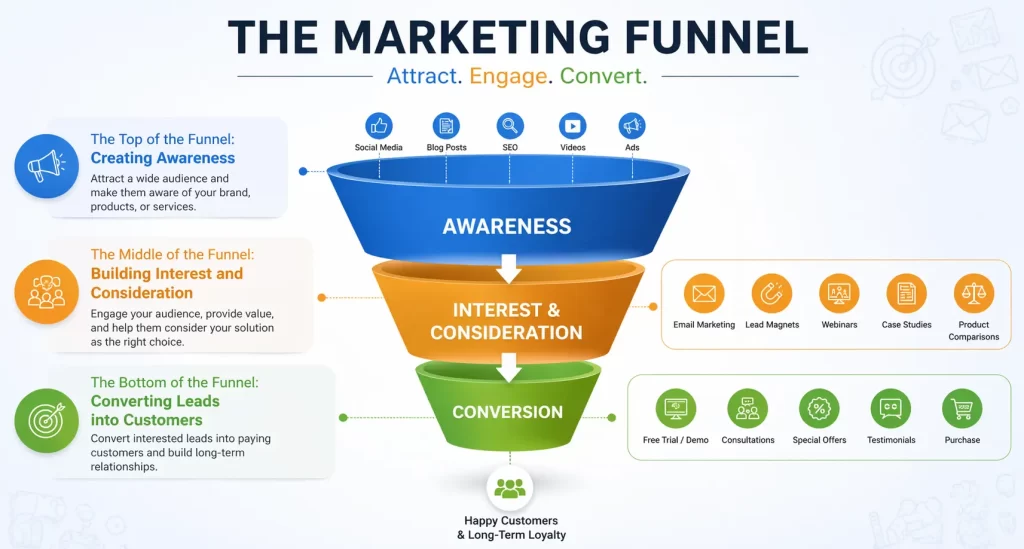
The top of the funnel is often called the Awareness stage. That is when things quietly kick off. Here, future buyers may have never heard of you. Sometimes, they do not yet see there’s an issue worth fixing. Get noticed first, then let them know who you are. Right now, it isn’t about pushing something to buy. It’s more like slipping useful insights into spaces people already hang out. Think of it as being helpful without asking for anything back. Visibility grows when you show up with substance, not sales talk. Your presence matters most where attention naturally lands.
Out there, being seen matters more than anything else right now. Without visibility, no one shows up – which means no sales either. Some companies turn to blogs, others lean on social platforms or fine tune their site for search engines. Getting found starts with showing up where people look. Helpful information keeps readers around longer. Easy-to-digest pieces work best when confusion is high. Answering simple questions builds quiet trust over time. A steady voice in the noise becomes a go-to spot eventually. Free value quietly builds trust over time. Later steps in the process rest on that growing confidence. Here are six common ways to build awareness for your brand:
- Posting educational videos on platforms like YouTube or TikTok.
- Writing helpful blog articles that answer common industry questions.
- Running targeted social media ads to reach new demographics.
- Optimizing your website so it appears in Google search results.
- Participating in local community events or online industry forums.
- Sharing infographics that simplify complex topics for your audience.
The Middle of the Funnel: Building Interest and Consideration
Once a person knows who you are, they move into the middle of the funnel. That space? It’s where curiosity grows and choices start forming. A clear need has shown up by now. Because that need exists, searches begin – different paths get weighed. One option bumps against another, quietly, without rush. Maybe they’re checking out your site, scanning what others have said, or putting their name down for updates. Here’s where you prove – without saying it outright – that picking you makes sense for exactly what they need.
Right now, details matter most. Shifting focus means diving into real answers instead of broad ideas. Prove what you know by sharing actual outcomes from past work. Stories that show success tend to stick – use those. Examples like step-by-step walkthroughs, live demos, or full project breakdowns often hit harder than summaries. Right now, you’re forming trust by showing real insight into what users struggle with. These folks sit somewhere between interest and hesitation – willing to look, not ready to leap. Because they wonder whether it’s worth it, clear useful details can quietly ease their concerns. What matters here is giving them something solid to hold onto.. Consider these six methods to keep potential customers engaged:
- Offering a free e-book or guide in exchange for an email.
- Hosting a live webinar to answer specific customer questions.
- Sending out a regular newsletter with tips and industry updates.
- Creating comparison charts that show your unique selling points.
- Sharing detailed testimonials and success stories from previous clients.
- Developing interactive tools like calculators or quizzes for users.
The Bottom of the Funnel: Converting Leads into Customers
The bottom of the funnel is the most exciting part because this is where the Conversion happens. Someone who knows what they want lands on your site. Because they compared options carefully, your offer stands out now. To move forward, clarity matters most – show exactly how to proceed without extra steps. A messy payment screen might send them away instead. Hidden costs? That hesitation grows fast. Smooth paths keep interest alive, especially when decisions hang in balance. Finish strong by removing every barrier blocking the way.
Offering a limited-time discount, maybe even a free trial, could help seal the agreement. Reducing how risky the choice feels makes people more likely to act. Clear words matter here – say exactly what good comes from saying yes. Benefits need to stand out, not features nobody asked for. At NVJ Developers, results come from websites built to convert at this exact moment. A visitor might leave just when they’re ready to buy, if pages take too long to load or links confuse them. When messages are straightforward, yet time feels limited, clicking ‘buy’ suddenly makes sense. Speed matters only as much as clarity does. Here are six tactics to help finalize a sale:
- Providing a limited-time discount code to encourage immediate action.
- Offering a free consultation or a product demonstration call.
- Displaying trust badges and secure payment icons at checkout.
- Using retargeting ads to remind people of items in their cart.
- Highlighting a strong warranty or satisfaction guarantee policy.
- Making the “Buy Now” or “Sign Up” buttons easy to find.
Post-Purchase: Retention and Advocacy
Most folks believe selling marks the finish line. Wrong. What happens after grabs equal weight. That space under the funnel? It matters. Think Retention. Think of Advocacy. Pulling in fresh faces burns way more cash than holding on to those already sold. After a purchase, step back into service mode. Offer worth. Again. Always. Happy customers often return. When service feels good, word spreads – neighbors mention it, coworkers bring it up. A sale today could mean more next month. People talk when things go right.
People you make happy often tell others about what you do. Since folks believe suggestions from those they know, that kind of talk spreads fast. Staying close by sending emails helps, just like giving thanks for repeat visits or inviting opinions. When someone feels seen, sticking around makes sense to them. Now picture this: happy buyers become quiet supporters who pull others toward the start of your process. Over time, that rhythm builds steady momentum without needing constant outside effort. Focus on these six ways to keep your customers coming back:
- Sending a personalized thank-you email after every single purchase.
- Creating a loyalty program that rewards frequent buyers.
- Providing excellent and responsive customer support at all times.
- Asking for honest reviews and sharing them on social media.
- Giving early access to new products or special sales events.
- Sending helpful “how-to” content related to the product they bought.
Why Your Business Needs a Clear Funnel
Lost without a map, your sales could wander aimlessly when no funnel guides them. Spending cash on ads? Your site may crash under pressure if it cannot manage sudden visits. Loads of people drop by yet leave empty handed simply because steps are missing. Picture how things connect only once the whole path comes into view. Where folks step away becomes clear, helping tweak things. Because every part of how customers move gets equal attention from your outreach.
NVJ Developers builds digital systems that keep your sales process strong. Starting with search engine visibility, then shaping web pages that turn visitors into buyers – each part plays its role. Once the flow makes sense, choices around effort and spending become clearer. Guesswork fades when numbers guide the path instead of wishes. Smooth pathways mean people get what they need easily, while results improve on the bottom line.
Frequently Asked Questions
Q: What is a marketing funnel in simple terms?
A marketing funnel is the path a customer takes from discovering your brand to making a purchase. It helps businesses understand how to talk to people at different stages. It guides a person from being a stranger to becoming a loyal customer.
Q: Why is it shaped like a funnel?
It is shaped like a funnel because you start with a large number of people at the top. As they move through the stages, some lose interest. Only a smaller, more committed group reaches the bottom to complete a final purchase.
Q: How many stages are in a marketing funnel?
Most funnels have four main stages which include awareness, interest, desire, and action. Some experts add more stages like loyalty and advocacy. The number can vary depending on how detailed you want your business strategy to be for your target audience.
Q: What is the most important stage of the funnel?
Every stage is important because they all work together as a system. However, awareness is crucial because without it, nobody knows you exist. Without a strong bottom stage, you will not make any money. You must balance all stages for success.
Q: Can a marketing funnel work for small businesses?
Yes, marketing funnels are essential for small businesses to grow effectively. They help small owners focus their limited resources on the right activities. A funnel ensures you are not wasting money on people who are not ready to buy from you.
Q: How do I know if my funnel is working?
You can tell if your funnel is working by looking at your data. Check how many people visit your site versus how many buy. If many people visit but none buy, your middle or bottom funnel stages might need some improvement.
Q: How long does it take to build a funnel?
Building a basic funnel can take a few weeks to set up correctly. However, a funnel is never truly finished because you should always be testing it. Regular updates and improvements help ensure that your funnel remains effective as market trends change.
Q: Does social media help with the marketing funnel?
Social media is a powerful tool for the awareness and interest stages. It allows you to reach a massive audience and engage with them directly. You can use posts and ads to drive people into the deeper stages of your sales funnel.
Conclusion
Understanding the marketing funnel is a game changer for any business owner or marketer. It provides a clear map of how people interact with your brand and what they need from you at every step. By focusing on awareness, interest, conversion, and retention, you create a complete system for growth. Each stage requires a different approach, but the ultimate goal is always to build trust and provide value. At NVJ Developers, we are committed to helping you navigate this digital landscape with ease. If you are ready to take your business to the next level and build a funnel that truly performs, contact us today. Let us work together to turn your visitors into your biggest fans.